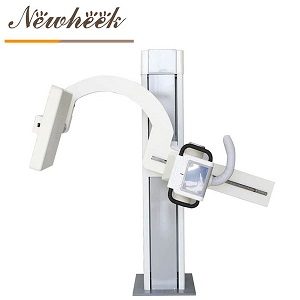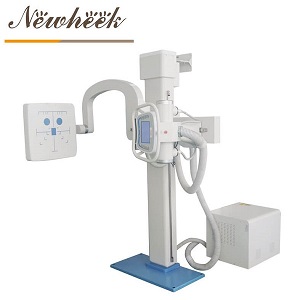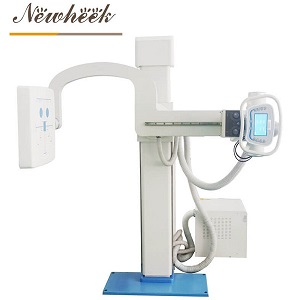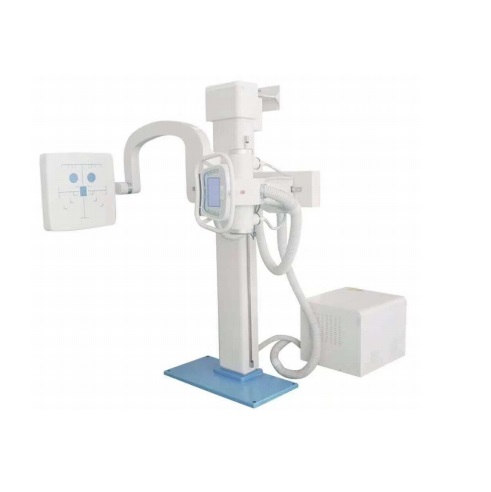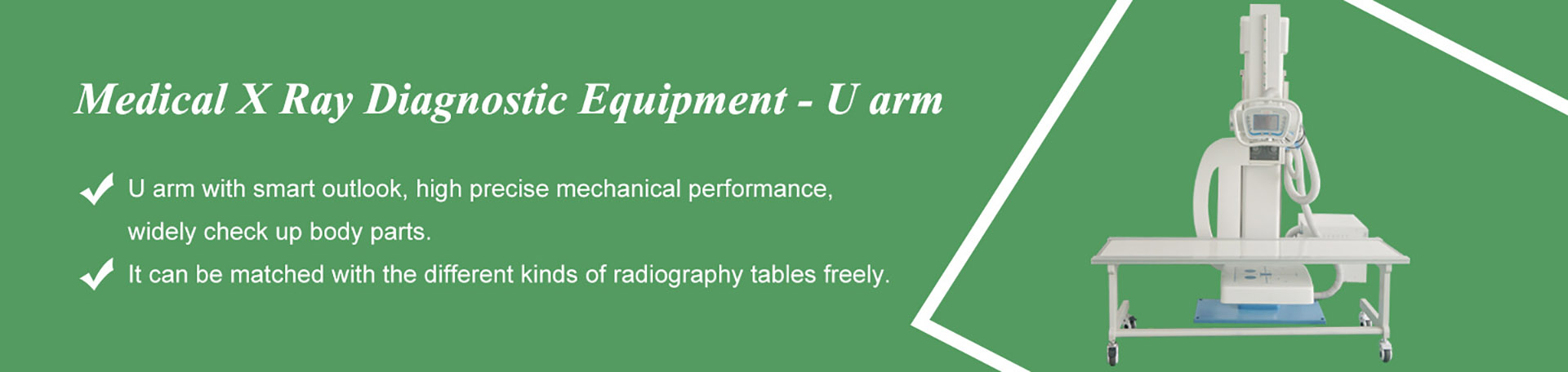

A stationary radiography room is built from two supporting stands that never appear in the same brochure photo but decide everything: the tube stand that carries and positions the X-ray tube head, and the bucky stand that holds the detector (or cassette) steady for upright and mobile work. In 2026 the pairing decision matters more than either stand alone — buyers increasingly evaluate stands as one integrated positioning workflow rather than as separate hardware, and getting the pairing wrong is what produces rooms where the two halves never quite line up.
Walk through any radiography room and you can physically point at both stands. One carries the tube head and collimator on a floor column or a wheeled mobile frame. The other waits at the wall — or on its own trolley, or on a portable tripod — holding the grid and detector where the patient will stand. Most buying guides treat them as separate product categories. This article treats them as what they are in daily use: a matched pair, and walks through how to pair them deliberately in 2026 rather than inheriting whatever combination a quotation happens to include.
Three developments over the past year pushed stand pairing from an installer’s afterthought to a specification line:
Industry analysis of the worldwide X-ray tube stand market published in 2026 (PW Consulting) describes a market that “moved toward smarter, more automated motion control” between 2024 and 2026, with buyers increasingly evaluating stands “as part of an integrated imaging workflow rather than as standalone hardware.” The same analysis notes that manufacturers now differentiate on functional fit — how the stand behaves inside a room — rather than on headline features. Pairing logic is functional fit.
Market research on digital radiography systems (HDIN Research, 2026) still classifies fixed systems — a dedicated room with a floor- or ceiling-mounted tube and a bucky table or wall stand — as the “cornerstone” of high-throughput radiology, prized for stability and precision. The same research expects the portable segment to grow faster as imaging decentralizes. The practical consequence: more facilities now run both a fixed room and mobile capability, which makes the boundary between the two — and the stands that define it — an explicit planning question.
Tube stands and bucky stands are among the longest-lived mechanical components in a room, while generators, detectors and software turn over far faster. A pairing chosen casually in year one becomes the constraint every future upgrade must route around. Choosing the pair deliberately is cheaper than re-pairing later.
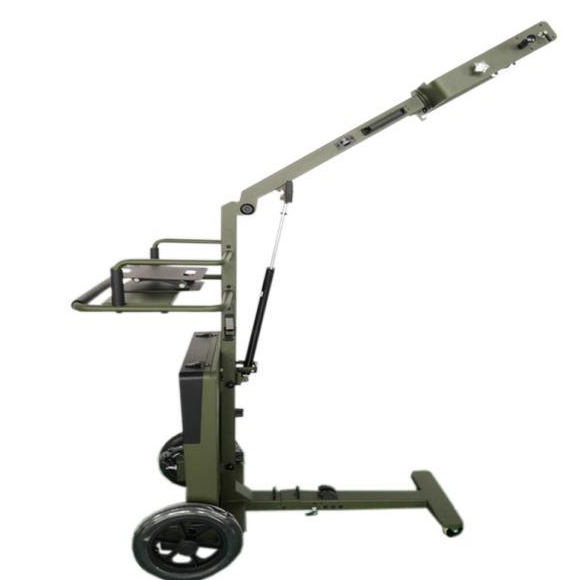
The tube stand carries the X-ray tube head and collimator, positions them at the required height and angle, and holds them there against mechanical drift. On this site the family splits into two practical groups:
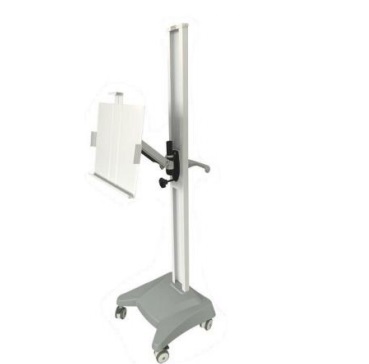
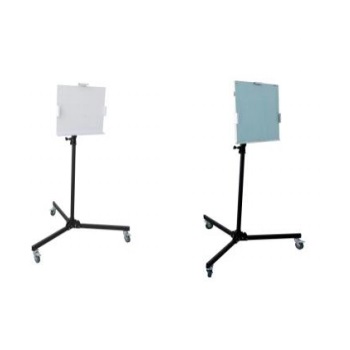
The bucky stand holds the detector or cassette — and usually the anti-scatter grid — in a plane the patient can stand or sit against. The family on this site ranges from fixed wall-mounted columns and side- or front-mounted vertical stands, to trolley-style upright stands that move between rooms, to portable tripod-style bucky stands that fold for ward and field work. If you are still choosing which upright form factor fits your room, start with the plain-language bucky stand guide — this article assumes the form factor is decided and focuses on pairing.
Instead of comparing stands spec by spec, compare the pairs they form. Four pairings cover the overwhelming majority of real installations:
| Pairing | Tube-stand half | Upright half | Fits |
|---|---|---|---|
| A. The compact clinic pair | Manual mobile stand — tube goes where the exam needs it | Wall-mounted or fixed-column bucky stand as the one permanent “address” in the room | Low-to-medium volume clinics; one room doing chest, skeletal and tabletop work |
| B. The dedicated chest pair | Fixed tube column aligned to the upright | Side- or front-mounted vertical bucky stand at a fixed SID | High-volume chest lists where every second of re-positioning is repeated all day |
| C. The mobile kit pair | Mobile tube stand (manual or electric-assist) | Portable or trolley-style bucky stand | Ward radiography, multi-room facilities, field and veterinary work — the pair that travels together |
| D. The table-centric pair | Fixed column over a bucky table, with the upright as second station | Column bucky stand sharing the detector ecosystem with the table bucky | General rooms splitting volume between supine table work and upright work (the classic universal-room layout) |
Two pairing notes from the field:
A pair either works as one geometric system or it fights the technologist every shift. Five compatibility points decide which — none of them requires a datasheet to check on day one, and all of them should be confirmed with the supplier in writing before the quote is signed:
The tube stand’s travel range and the bucky stand’s detector plane must be able to reach — and hold — the source-to-image distances your standard views require, with margin for patient size. Confirm the achievable SID range as a pair, not as two separate specifications.
If the room runs one detector between the table bucky and the upright — common in pairings A and D — the upright’s holder must accept that exact detector or cassette format, and the swap path between the two stations must be short enough to do forty times a day. Verify the physical fit with the real detector in hand during installation, not from brochure outlines.
If either half carries an anti-scatter grid, its ratio and focal range must suit the SID the pair actually operates at. Where grids move between stations, one grid serving both is only correct if both stations work at compatible geometry. Our guide to angled, lateral and cross-table exams covers how geometry choices interact with grid use.
The height range the tube stand can reach must overlap the height range the upright can present — over the full range of patient heights you serve, from pediatric to tall adult standing chests. Mismatched overlap is the classic cause of “we can’t get low enough / high enough” callbacks after installation.
Whatever locks, brakes or friction settings hold each stand in place must hold against the other half’s routine use — a tube stand that drifts during upright work wastes the best bucky stand in the market. Locking behavior belongs on the acceptance-test checklist, not in the brochure.
The automation question from our double-column and bucky-stand guides applies to this pairing too — but the two halves can be answered independently, which is the budget lever most quotations ignore:
The honest 2026 baseline, per the market data: automatic positioning has become the mainstream segment for new floor-mounted rooms — but mobile kits and low-volume clinics still install manual pairs worldwide because the pairing is right for their volume. Automation is a property of the pair, bought where the workload proves it.
Before signing, put these seven — they are the pairing-level questions the individual spec sheets do not answer:
Buy the pair, not the stands. A 2026 quotation that prices a tube stand and a bucky stand as two independent line items is answering a question nobody asked. The room lives or dies by the geometry the two halves share: the distances they can hold, the detector they can interchange, the heights they can overlap, and the discipline with which they stay put. Decide the pairing deliberately — compact, chest-dedicated, mobile kit, or table-centric — confirm the five compatibility points in writing, and let the automation tier follow the workload rather than the brochure. Everything mechanical in that room will outlive two detector upgrades; it is worth choosing as if that were true, because it is.
Yes — that is pairing A, and it is the most common compact-room configuration: the wall stand provides one fixed, repeatable “address” for upright work while the mobile tube stand serves every other position in the room. The pairing works as long as the tube stand’s travel overlaps the wall stand’s detector plane for all your standard views, which should be confirmed in writing before purchase.
No — mixed pairings are common, especially when adding an upright to an existing room. What must match is the geometry and the detector interchange, not the brand. Buying both halves from one supplier simply means one party is accountable for the five compatibility points in Section 4; mixing suppliers means you own that verification yourself.
It depends on volume and staff mix, not on status. Electric-assisted travel saves motion time on every exposure and reduces operator strain, so high-volume rooms typically recover the difference quickly. Low-volume rooms with stable staff often run manual pairs for years without complaint. Apply the same workload-based logic to both halves independently — the tube half first, since it moves most often.
Buying a mobile tube stand for flexibility, then pairing it with an upright that cannot leave the room and a detector holder that does not fit the room’s actual cassette formats — flexibility cancelled on both ends. The fix costs nothing at quotation time: verify the interchange formats and, if ward or multi-room work is planned, choose a trolley or portable upright that can actually meet the mobile tube stand where the patient is.
For low-volume, multi-room, ward or field work — yes, and many mobile kits run exactly that way. For a dedicated high-volume chest room, no: a fixed column stands where the patient expects it every time, with no setup step per patient. Match the upright’s mobility to how often it must move, not to how mobile it could be.
Planning a room around a specific pairing? Our team works through tube-stand and bucky-stand pairings daily — mobile kits, dedicated chest rooms, and table-centric universal rooms. Send us your room dimensions, exam mix and existing equipment, and we will confirm which pairing fits and what each half needs to match, in writing, before you commit.
???? admin@newheek.cn | ????/WhatsApp: +86 19062611512 | Contact page
Tel: +86 19062611512
Email : admin@newheek.cn
Company : Weifang Newheek Electronic Technology Co., Ltd.