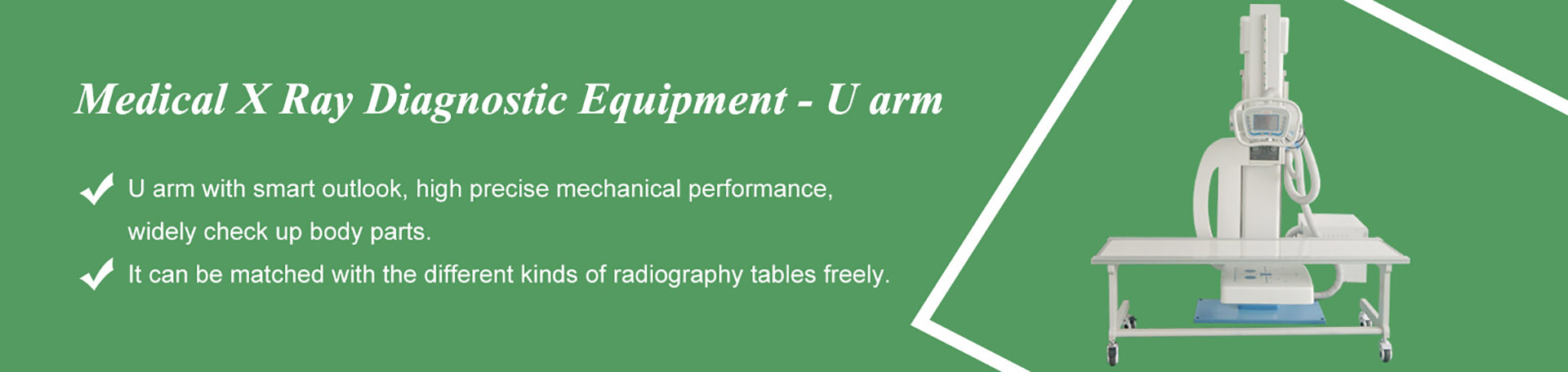

The real difference between a manual and a motorized bucky stand is not comfort — it is how many times per day your staff are exposed to the exact movements that 2026 peer-reviewed studies keep flagging as the profession’s top injury risk factors: repositioning patients and detectors, bending to align equipment, and lifting during positioning. A manual stand can produce the same images; the question a buyer should ask is what the repeated manual adjustments cost a department over five to ten years, measured against the price gap. The 2026 data does not prove that manual stands injure people — the studies themselves are careful on this point — but it does show which movements dominate the risk, and motorized height adjustment removes several of them entirely.
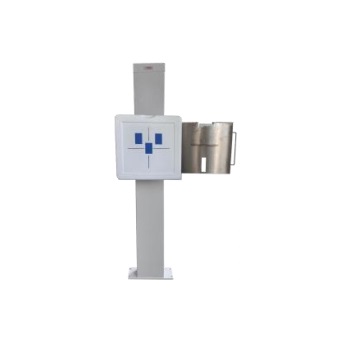
Work-related musculoskeletal disorders — WRMSDs — are not a new topic in radiography. What makes 2026 different is the volume of peer-reviewed data published within a single year, across four countries and more than 1,100 participants. The headline numbers:
| Study (journal, year, sample) | Prevalence reported | Most relevant risk factors | Consequences reported |
|---|---|---|---|
| Saudi Arabia — Healthcare (MDPI), 2026; 237 radiographers & sonographers | 89.5% reported WRMSDs in the past 7 days; lower back 56.5%, neck 40.5% | Night shifts ≥3/week showed the strongest association | Average pain intensity 5.55/10 |
| Saudi Arabia — Radiography, 2026; 335 radiographers | 75% lower back pain in the past 12 months; 41% current symptoms | “Patient or detector repositioning” accounted for 50% of reported risk-factor exposure; pushing/pulling equipment 61%, twisting 42%, lead aprons 43% | 32% reduced workload, 21% sickness absence, 11% hospitalized, 43% considered leaving the profession |
| India — Radiography, 2026; 294 radiographers | Current lower back pain 47.3%; 50.3% in the past year | Bending 48.7%, transferring patients 45.6%, pushing/pulling 46.3% | 44.6% still transfer patients alone despite training, citing staff and time shortages |
| Ghana — JMIRS (Journal of Medical Imaging and Radiation Sciences), 2026; 107 imaging professionals | 87% reported at least one MSD; lower back 81.7% | Patient lifting 85.6%; “lack of ergonomic equipment” was the strongest predictor (adjusted prevalence ratio 2.71) — yet only 30% had access to such equipment | — |
| South Africa — 2026; 144 radiographers | Work-related neck pain 65.6% | Lifting/positioning patients or equipment 78.7%, lead aprons 75.4% | 44.3% reported reduced work performance |
One reading rule before going further: every one of these studies is a cross-sectional design, and their authors say so explicitly. They establish associations, not causation. Nothing here proves that a manual stand caused anyone’s back pain. What the data does support is narrower and more useful for a buyer: the movements that dominate the risk profile are precisely the ones a motorized stand eliminates or reduces.
Strip away the statistics and a bucky stand exam is a sequence of physical actions. Compare the two tiers action by action:

The manual tier is genuinely cheaper at purchase — no serious source disputes that. The honest way to frame the decision is to price both columns fully:
A defensible purchasing position looks like this: calculate the price gap, estimate your daily exam volume and the number of manual height adjustments each exam requires, apply your own local staffing costs to the absence and turnover rates the literature reports, and compare. Departments with high upright volumes and chronic staffing gaps will land on different answers than low-volume private practices — which is exactly why the calculation belongs in your request, not in a vendor’s brochure.
This is not an argument that every room needs a motor. Manual and gas-spring stands remain rational choices in specific situations, and pretending otherwise would be its own kind of sales pitch:
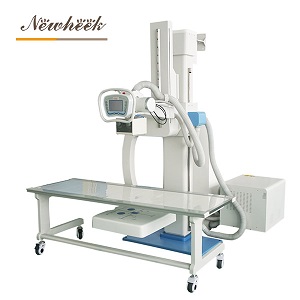
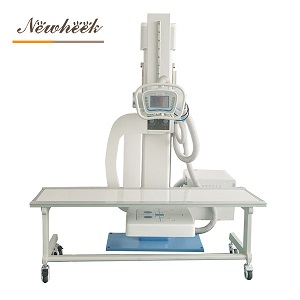
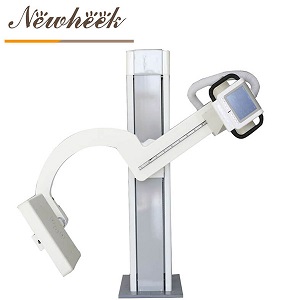
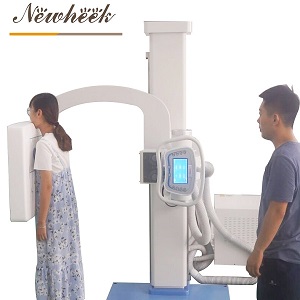
For rooms that do justify motorization, the hardware choice is straightforward: electrically driven receptor columns like those described on our electric double bucky stand page, or wall-mounted builds with adjustable height and optional mobile bases such as the wall-mounted bucky stand. What matters more than the category is what you verify at the demo.

Specifications answer “does it exist”; a demo answers “does it work in your room.” Bring a tape measure, a stopwatch and — this is the part most buyers skip — your own patient mix:
Then put the same points in writing. Six questions that belong in every motorized bucky stand RFQ:
Room-side constraints interact with this decision too — ceiling height, floor loading and power provision all differ between manual and motorized builds. Our guide to U-arm room requirements covers the planning side, and the same logic applies to any upright stand you add to the room.
The honest version: the 2026 studies identify repositioning patients and equipment, bending and lifting as the dominant risk factors for radiographer musculoskeletal disorders — and a motorized stand removes or reduces those specific movements. No study demonstrates that installing one reduces injury rates; that would require a longitudinal design nobody has published. The defensible claim is about exposure: fewer manual lifts and bends per shift means less exposure to the movements the literature most consistently associates with harm.
No — and this is the single most common specification trap in the category. Public listings variously quote figures around 136 kg, 200 kg, or 440 lbs, and they do not always agree on whether the number covers the patient, the receptor assembly, or both. Ask the vendor to state in writing what the rating covers and whether it includes the detector and grid, and put that statement in the contract.
Current-generation motorized stands commonly use low-noise motors with damped movement, partly to avoid startling elderly or pediatric patients. It is a published design feature of the tier, not a universal guarantee — test it in the demo with a real person standing at the stand before you accept it.
Not necessarily. Departments sometimes motorize the tube column first — the heaviest and most frequent movement — and keep the manual wall stand, then upgrade the stand in a later budget cycle. The order matters less than measuring where your department’s actual repositioning volume sits, which is data your own exam logs can give you in an afternoon.
If you are weighing a motorized stand against a manual one for a specific room, send us the exam list, the daily upright volume and your ceiling height — those three inputs determine which tier makes sense. You can start from our electric double bucky stand product page, review the full structure and motion range of a U-arm system, and reach us directly at admin@newheek.cn or +86 19062611512 (also WhatsApp) via our contact page.
Tel: +86 19062611512
Email : admin@newheek.cn
Company : Weifang Newheek Electronic Technology Co., Ltd.