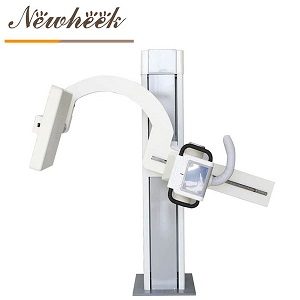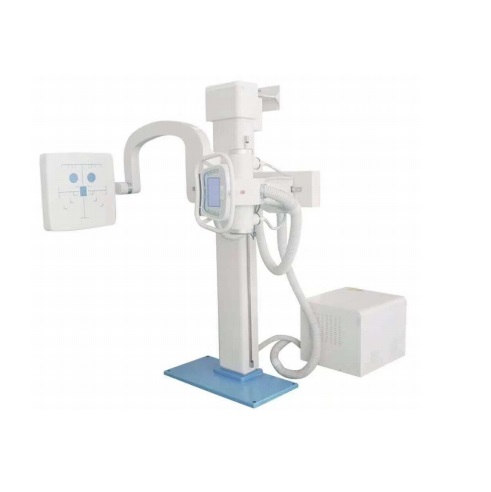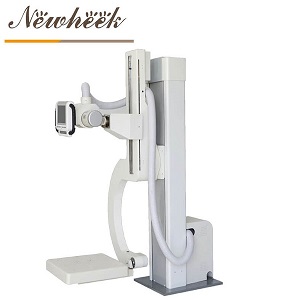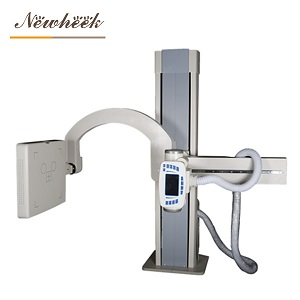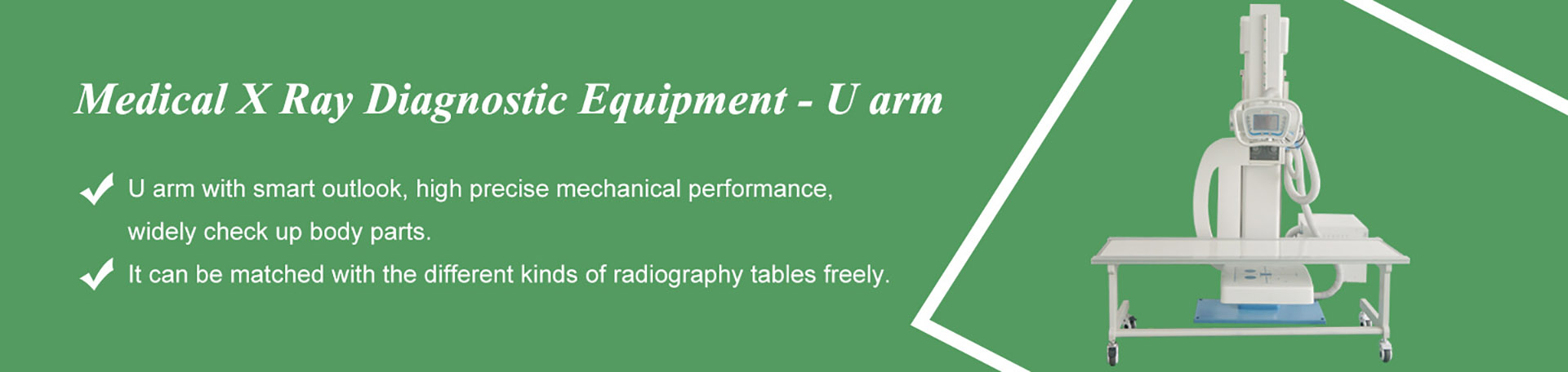

there is no single “best” column layout. A U-arm (often called a sickle arm) wins when one room has to do standing and lying work in a tight footprint; a double-column arrangement wins when high-volume standing chest work and table work each deserve a dedicated receptor path; and the UC-arm variant earns its extra hardware when positioning flexibility matters more than anything else. The honest comparison below goes dimension by dimension — installation, patient workflow, exam coverage, automation, and ownership — and ends with a fill-in decision table.
Suppliers tend to write about the layout they sell. This article does the opposite: each section names what each layout gives up, not just what it delivers, because the real cost of a column layout shows up in the workflows it makes awkward — months after the purchase order is forgotten.
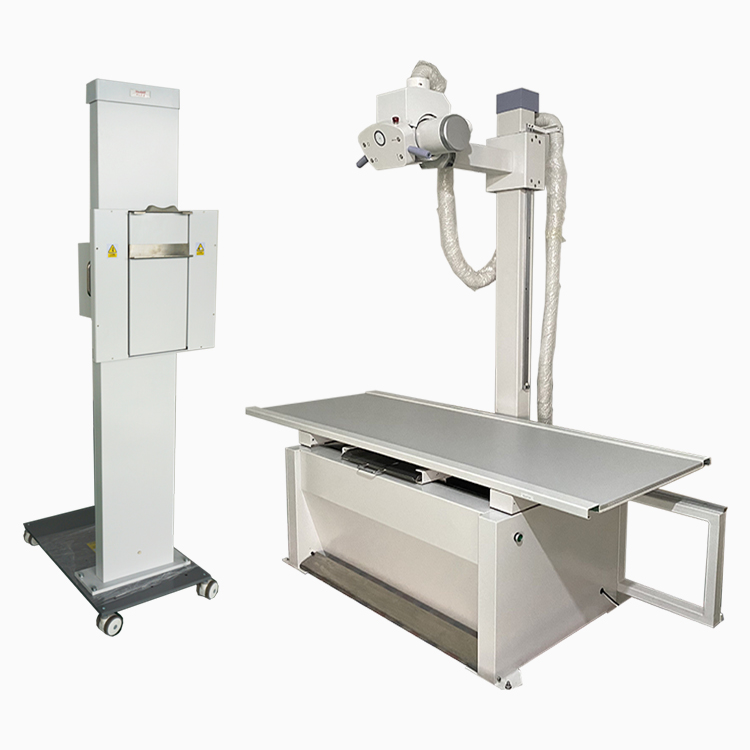
All three layouts are floor-mounted, so none of them depends on ceiling reinforcement — a genuine advantage over ceiling-suspended systems in older buildings. The differences are in footprint and flow:
What each gives up: the U-arm’s compactness means tube and detector share one arm — when the arm is positioned for a table shot, it is by definition not available for a standing shot. The double column’s twin paths mean both sides need service access and floor space forever.
This is where the layouts separate most clearly, and where the honest comparison matters most:
Angled, lateral-decubitus, and cross-table work is where marketing materials get quiet. The honest summary: every layout has angles it reaches easily and angles it reaches awkwardly or not at all. The U-arm’s arm geometry favors on-axis work; off-axis and cross-table techniques need positioning workarounds that our angled-views explainer walks through technique by technique. Double-column rooms handle some of these cases more naturally because the tube column moves independently — but “more naturally” is not “always,” and rooms buying for a trauma or orthopedic-heavy caseload should test their specific exam list against the layout before committing.
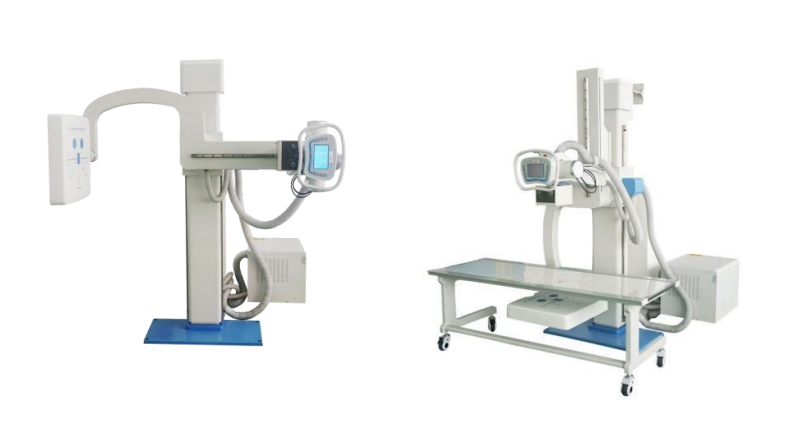
Automation can be added to all three layouts, but it lands differently:
What each gives up: a buyer who expects to retrofit heavy automation later should weigh how much of it the single-column layouts can absorb. A buyer who wants automation now should price the tier into the first purchase — retrofit pricing rarely favors the late add-on.
Single-column layouts (U-arm and UC-arm) are mechanically simpler: fewer rails, fewer drives, one base. That simplicity shows up in service visits and in relocation — a U-arm is the most practical layout to move when a clinic changes premises. Double-column rooms carry more moving hardware to maintain, but their components are individually simpler and more standardized, and a fault on one column does not necessarily idle the other. Neither is universally cheaper to own; the honest answer is that service cost follows the amount of motion hardware, and the amount of motion hardware follows the layout and its automation tier.
| If your room… | Lean toward |
|---|---|
| Is a single compact room doing mixed standing and table work | U-arm / sickle arm |
| Serves many wheelchair, elderly, or transfer-sensitive patients | U-arm / sickle arm |
| Has high standing-chest volume alongside steady table volume | Double column |
| Plans a step-by-step automation upgrade over the years | Double column |
| Needs maximum positioning freedom for varied protocols | UC-arm |
| May relocate premises within the equipment’s life | U-arm / sickle arm |
In common industry usage, yes — both names describe the single-column layout whose U-shaped arm carries tube and detector as a rotating unit. Different regions and suppliers favor different names, which is worth remembering when comparing quotations that use the terms interchangeably.
It can do most exam types, but not with the same parallelism: when the arm is set for a table exposure, it is committed until the exposure is done. Rooms where a standing queue and a table queue run simultaneously feel that constraint daily.
The U-arm, on footprint and weight-distribution grounds: one floor base, no ceiling dependency. The UC-arm follows closely; the double column needs the most floor planning. All three avoid ceiling reinforcement, unlike suspended systems.
It depends on the exam mix. Extremity and follow-up work fits any layout; clinics doing frequent angled, cross-table, or intraoperative-style work should test those specific projections against each layout’s geometry before ordering — and weigh the double column’s independent tube movement accordingly.
Yes on all three layouts, but the economics differ by layout and tier. Decide the intended end state before purchase and ask the supplier to price the path, because retrofits rarely cost less than specifying the tier up front.
Undecided between the three layouts? Send us your room dimensions and your typical exam list — we will map each layout against your caseload and tell you honestly where each one would struggle.
Email: admin@newheek.cn | Tel/WhatsApp: +86 19062611512
Tel: +86 19062611512
Email : admin@newheek.cn
Company : Weifang Newheek Electronic Technology Co., Ltd.