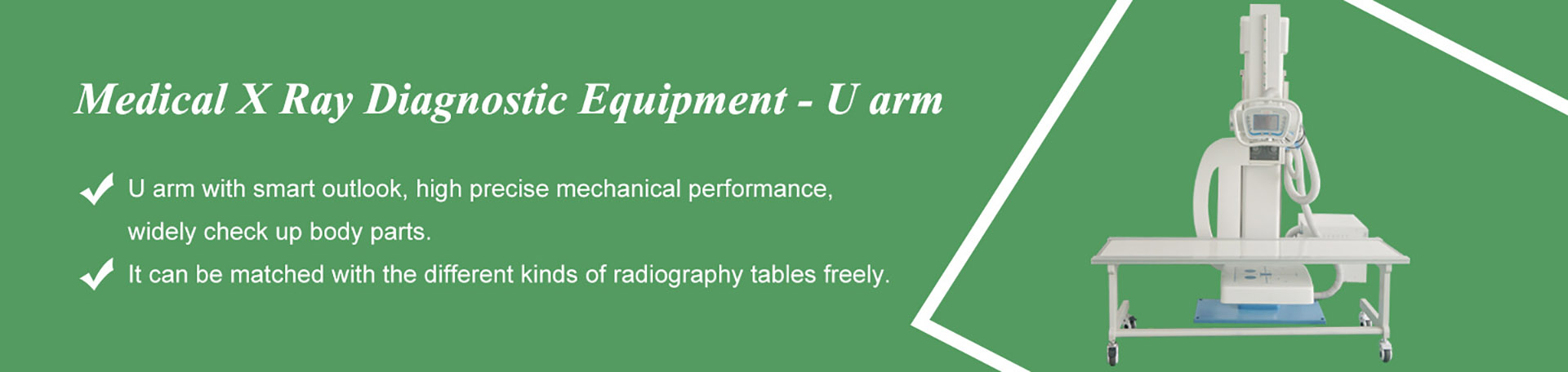

one of the most underused clinical advantages of a sickle arm (U-arm) X-ray machine is what it does for patients who cannot easily move: the tube arm and detector travel around a seated or wheelchair-bound patient, so many examinations can be completed with the patient staying in the chair — fewer transfers, fewer fall risks, and a faster list.
For a mobile patient, getting a chest film is trivial. For a patient recovering from surgery, living with severe arthritis, managing a neurological condition, or using a wheelchair full-time, the “simple” chest X-ray can be the hardest five minutes of the hospital visit. This article walks through how a sickle arm room handles these patients well — and where a transfer is still genuinely necessary.

In most sickle arm rooms, the equipment is not the dangerous part of the visit — the transfer is. Moving a limited-mobility patient from wheelchair to table and back concentrates several risks into a few seconds:
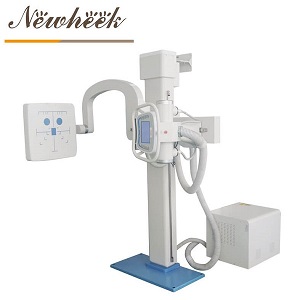
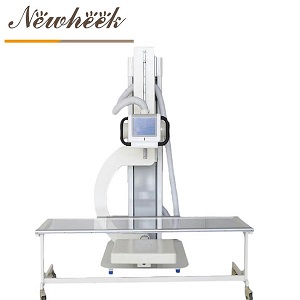
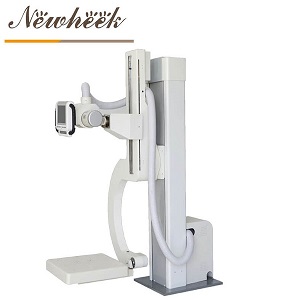
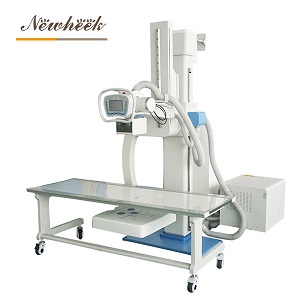
A sickle arm attacks this problem structurally: because the tube arm and the detector carriage both rotate and travel on a single floor-mounted column, the machine comes to the patient’s position instead of the patient moving to a fixed table-and-wall-stand geometry. If you are new to the hardware itself, start with our plain-language breakdown of sickle arm structure, motion range, and advantages, then come back to the patient-workflow view here.
The classic case. The patient remains seated in the wheelchair, facing the column; the detector carriage is positioned behind or beside the chair at chest height, and the tube arm rotates to face it from the opposite side. The C-shaped arm geometry — the reason the design is called a sickle arm — lets the tube and detector close around the patient from either side, which is exactly what a wheelchair position requires and what a fixed wall stand cannot offer without the patient standing.
For patients who can transfer by pivoting but cannot stand unaided, a simple armless stool often works better than the table: the arm rotates to any required angle around a seated patient, including oblique tube angles that would demand awkward patient rotation at a wall stand.
Where the examination calls for images in more than one body position, the arm moves between positions instead of the patient walking between a wall stand and a table. The same property supports dedicated weight-bearing protocols — a capability we examine separately in our article on lateral, oblique, and cross-table imaging on a U-arm.
Because repositioning is done by moving the machine rather than coaching the patient, the time between “patient ready” and “exposure ready” shrinks — which matters most for patients whose tolerance for holding a position is measured in seconds.

The technique differences between a wheelchair exposure and a standard erect exposure are small but real. These are the points worth standardizing in your room protocol:
Honesty about limits keeps this workflow safe. A transfer to the table remains necessary when:
When transfer is unavoidable, keep it short and supported: lock the wheels, use a pivot disc or slide board rather than pulling on limbs, assign a second person for non-weight-bearing patients, and plan the return transfer before the first one starts.
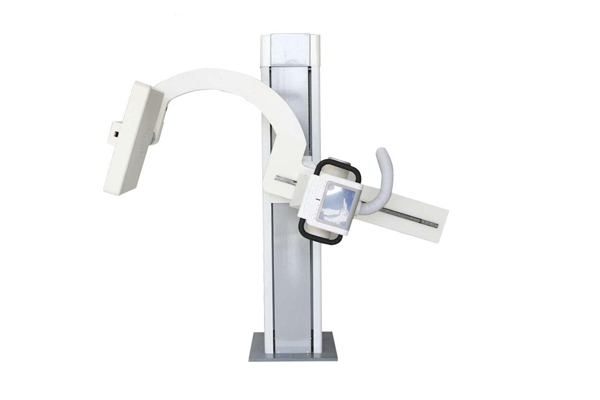
Yes, in a sickle arm room this is routine: the arm closes around the seated patient from the front and back. The main quality variable is what the wheelchair itself adds to the field — chair backs, handles, and headrests need managing, and the room protocol should say how.
Done properly, the diagnostic quality for erect chest work is equivalent; the geometry of tube and detector is the same. The differences are practical — artifacts from the chair and small rotation differences — and both are controllable with positioning discipline.
Yes, with two additions: the chair must be powered down so it cannot drift, and heavier powered chairs need more floor space for positioning. Confirm the travel zone accommodates the chair before calling the patient in.
This is exactly the intermediate case where a sickle arm earns its space: a seated exposure removes the standing requirement entirely, rather than attempting a standing exposure with a spotter — which is where falls happen.
No special accessories are required for the commonest views — the rotating arm and adjustable detector carriage are the design features doing the work. Room planning, chair management, and a written protocol matter more than hardware.
Planning a room that works for every patient who walks — or rolls — in? Tell us your room dimensions and patient mix, and we will help you configure a sickle arm setup around them.
Email: admin@newheek.cn | Phone / WhatsApp: +86 19062611512
Tel: +86 19062611512
Email : admin@newheek.cn
Company : Weifang Newheek Electronic Technology Co., Ltd.