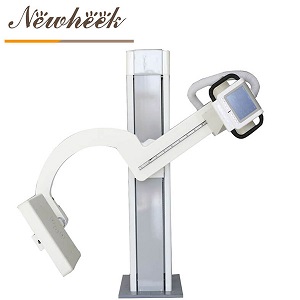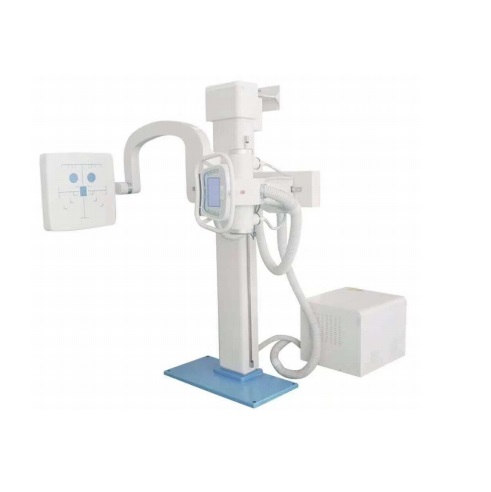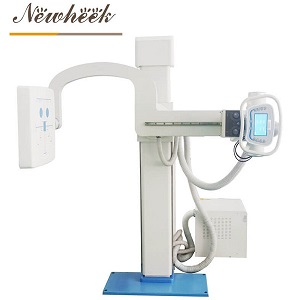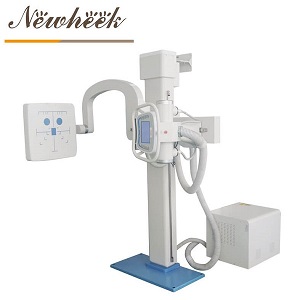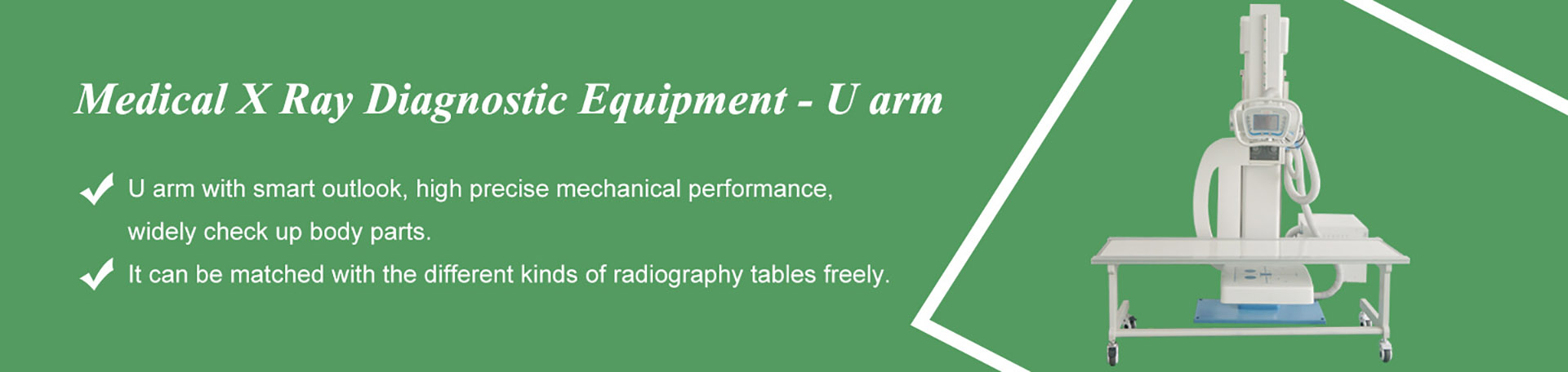

Quick answer: A sickle arm DR — the floor-column X-ray system with one curved arm carrying the tube and the detector — reaches the clinic as a room-sized shipment, not a parcel. The orders that avoid costly surprises are the ones where site, power, paperwork and after-sales terms are settled before the deposit leaves the bank. The steps below are the checks that tend to get skipped during a rushed quote.
A floor-mounted sickle arm stands on one column and sweeps a curved arm through a wide arc. The room has to clear the column footprint, the arm sweep and the wall-mounted cassette holder. The doorway that fits the packed crate is the part most often measured twice only after the truck is at the gate.
Ask the supplier for the packed dimensions of the column crate and the table crate, then measure the clinic’s door, the corridor and any step or threshold between the street and the room. A freight elevator with a low door is a common blocker — a crate that cleared the entrance still has to fit the lift.
Ceiling height matters where a wall stand is planned, because the upright holder rides high on the wall. Lead shielding is a local-regulation question, not a supplier question: the room’s radiation protection plan should be settled with the local authority before the machine is booked, not after the crate is on the dock.
A DR system draws a three-phase supply through a dedicated line. The exact voltage and current rating belong on the supplier’s written specification, not in a verbal quote, and the site electrician should see that sheet before the room is wired.
Grounding is where installations stall. A dedicated protective earth, kept separate from other equipment, is the usual requirement. A shared or noisy earth throws exposure faults that read like machine defects and take days to trace.
This step is covered in full on the power supply guide. The short version: get the figures in writing, match them to the destination country’s supply, and have the electrician sign off before delivery.
A quote line that reads “sickle arm DR, standard configuration” hides the items that decide whether the machine fits the caseload. The written specification should name each one, because an item that stays verbal stays changeable — usually upward, in price.
| Specification item | Why it decides fit |
|---|---|
| Detector size and type | Chest, extremity and table work pull in different directions; a small panel limits table studies |
| SID range and vertical travel | Whether wheelchair, stretcher and standing chest are all reachable from one position |
| Tube and generator output | Throughput for a busy queue versus a quiet clinic |
| Cassette holder or table options | Supine work needs a table; wall work needs a holder |
| Console language and presets | Staff training time on day one |
| DICOM and PACS connection | Whether images reach the system already in the building |
The aim is not to memorise numbers but to make the supplier put each item on paper. A specification that stays in email threads stays open to reinterpretation.
A sickle arm in an orthopedic-heavy practice lives differently from one in a quiet general clinic. The caseload, not the brochure, should set the detector size and the generator power.
A practice that mostly shoots standing chest and limb films can run on a smaller panel and a modest generator. A department that stacks abdomen, spine and table studies back to back needs the larger detector and the higher output to keep the queue moving instead of backing up.
The choice between a fixed U-arm and an independently rotating UC-arm belongs in this conversation as well. The UC platform adds angulation for oblique and tangential views, at a step up in price. That comparison is laid out on the advantages and disadvantages page.
The machine is a ten-year asset; the terms around it are decided in the order, not after a fault appears. Three items belong in writing:
None of these are defaults. They are line items a buyer asks for, or they are line items that get skipped and rediscovered at the worst moment.
A DR shipment crosses a border as paperwork as much as metal. The crate should carry:
Pre-shipment inspection is the step most buyers skip and most regret skipping. A third party can view the machine and the test images at the factory before it is crated. Writing that into the contract costs far less than refusing a container on the dock.
Accessories that look standard — grid, cassette, foot switch, lead apron — are the items most often missing from a “complete” crate. Count them against the order sheet on arrival, with the crate still open.
A three-phase dedicated supply with a clean protective earth is typical. The exact voltage and current rating should be on the supplier’s written specification and checked against the destination country’s supply before the room is wired. The power supply guide carries the detail.
A packing list, commercial invoice, instruction manual and factory test or calibration report are the baseline. Regulatory papers the destination country requires should be confirmed with a local agent and packed with the crate.
Training scope is set in the order — remote session, on-site visit, or manual only. The console and manual language should match the staff who will operate the machine, and that detail belongs in writing before delivery.
Detector size and type, SID range and vertical travel, tube and generator output, table or wall-stand options, console language and presets, and DICOM or PACS connection — each as a line item, not as “standard configuration”.
A third-party pre-shipment inspection at the factory, viewing the machine and the test images, is commonly supported. Naming it in the contract avoids refusing a container on arrival.
Send the intended room dimensions and the local supply voltage, and a written configuration can be returned for review against the caseload. The full structure and motion figures sit on the sickle arm explained page.
Phone / WhatsApp: +86 19062611512 | Email: admin@newheek.cn
Tel: +86 19062611512
Email : admin@newheek.cn
Company : Weifang Newheek Electronic Technology Co., Ltd.