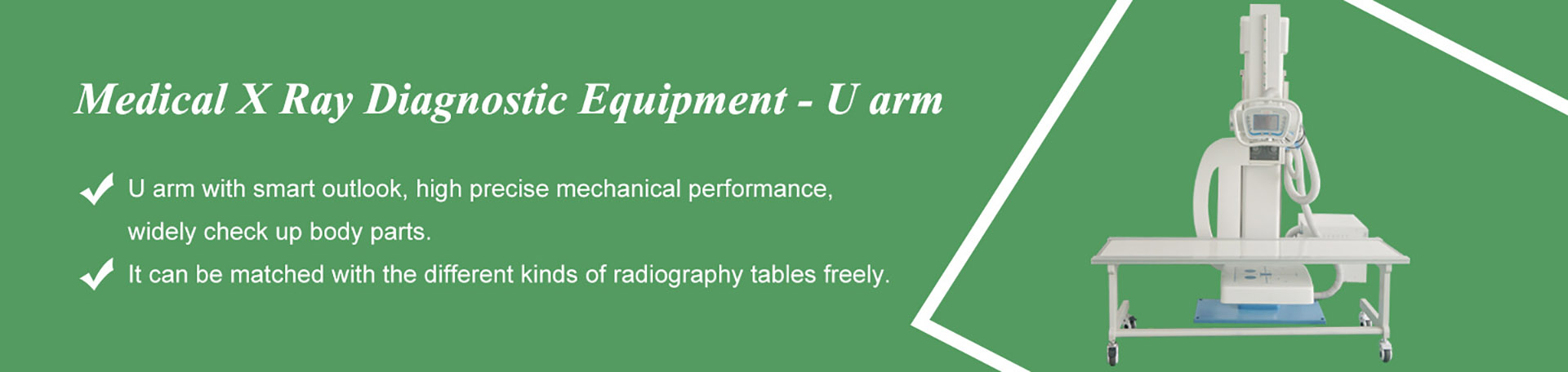

An image intensifier designation names an input-format family and a configuration variant; it is not a quality ranking. A real advantage emerges when the family, the selectable field arrangement, the mechanical envelope and the electrical interface of one unit line up with the machine already installed in a room. The code on a product listing points toward the right document. The written specification sheet, the installation note and the compatibility confirmation are the documents that define what a delivered unit contains and where it fits. Catalogue position, graphical ratings and the length of a code carry no technical meaning.
Email: admin@newheek.cn. WhatsApp: +86 19062611512
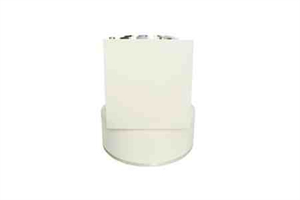
A designation on the public product pages reads as three parts rather than one opaque string. The leading characters identify the product family and the series. The numeric segment inside the code names an input-format family, which is the group of units built around one entrance-field class. A trailing suffix marks a configuration variant inside that family; the variants in the listing are written with Roman numerals, rendered here as plain II, III and IV. An entry without such a suffix and described as a replacement configuration addresses an installed system rather than a new build.
That structure has a practical consequence. A designation describes how a unit is configured and which family it belongs to. It does not state a measurement, an endurance count, a resolution grade or a performance level. Two units in one family can differ in housing, supply arrangement or camera interface, and two units in different families can share the same accessory set. Reading the code correctly means knowing which questions it answers and which questions belong on paper.
The six entries in the listing group into one larger-format family, one compact-format family with three variant suffixes, and two replacement configurations. The grouping below follows configuration logic rather than the order of a catalogue.
| Listed designation | Group | What the suffix or wording marks | Where an advantage can be examined |
|---|---|---|---|
| NK-33XZ | Larger-format family | A different entrance-field class within the same series | Overview-oriented work and the mechanical envelope of the host machine |
| NK-23XZ-II | Compact-format variant | One configuration variant of the compact family | Housing, supply arrangement and the camera interface as stated on the specification sheet |
| NK-23XZ-III | Compact-format variant | Another configuration variant of the same family | Comparison against the installed machine rather than against a neighbouring code |
| NK-23XZ-IV | Compact-format variant | A further configuration variant of the same family | Accessory set, mounting detail and the written acceptance documents |
| NK-23XZ, replacement configuration | Legacy-system replacement | A unit selected against equipment already in service | Flange pattern, cable routing, supply and the fit confirmation issued in writing |
| NK-23XZ, replacement configuration | Legacy-system replacement | A second replacement configuration for a different installed origin | The legacy equivalent recorded in the machine documentation and the order confirmation |
The two replacement entries share a family prefix and differ in the installed systems they are matched against. Treating them as one interchangeable item would discard the only information that separates them.
Two format families appear in the listing. The number inside a designation is a family name; quoting that number as a physical measurement inside prose would be a category error. Field dimensions are recorded in specification documents with their tolerances and test basis, not in the model code. A format family tells a reader which entrance-field class a unit was built for, and therefore which examination geometry it is likely to serve.
Selectable fields are a separate capability. A unit that offers more than one entrance field changes the balance between an overview and a magnified view during a single examination, without moving the patient or the equipment. That switching behaviour belongs to the control arrangement: how fields are selected, how the selected state is indicated, and how the change reaches the camera chain. The number of fields, their order and the control interface are lines on a specification sheet. A family prefix cannot express them.
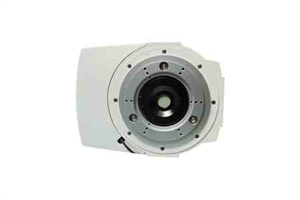
The II, III and IV suffixes distinguish configuration variants inside the compact family. In procurement practice a suffix can cover a housing form, a supply sub-assembly, a connector arrangement, an accessory set or a combination of those items. The suffix is a label for a defined build, which is precisely why it is useful: a service record, a spare-part order and a quotation can all refer to one reproducible configuration instead of a general description.
A suffix is not a version ladder. Nothing in the code states that one variant supersedes another, and nothing in a product listing establishes a ranking. Graphical ratings, price fields and the sequence in which entries appear are merchandising elements of a catalogue; they do not enter a technical comparison. When a variant is selected, the reason is recorded as a fit between its documented build and the installed machine, not as a position on a scale.
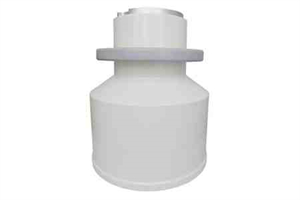
Two listed entries are described as replacement configurations for equipment already in service. Their advantage is mostly on the procurement and service side rather than in the imaging chain itself. An installed room has a fixed bracket, a flange pattern, a cable route, a low-voltage supply arrangement and a camera chain. A replacement unit is chosen against those existing conditions so that the room returns to service with a recorded fit instead of an assumption.
Compatibility is established per machine and in writing before an order is placed. A model name alone does not constitute a fit declaration, and a general claim of interchangeability would hide the details that decide the outcome: the mechanical envelope, the electrical interface, the optical output, and the documentation that the host system expects. Public technical notes for this series cite differing sets of legacy part codes across separate pages. Those codes are not reproduced here; the applicable equivalent is taken from the machine documentation and from a written confirmation attached to the order.
An advantage that survives contact with a real installation can be traced to one of four areas. Each area has a short statement that a designation can carry and a longer statement that only documentation can carry.
| Area | What the designation can signal | What the written documents state |
|---|---|---|
| Entrance field arrangement | The format family and the fact that a selectable-field build exists | The field arrangement, the control interface, the tolerances and the test basis |
| Supply and internal assembly | A defined build within a family | The low-voltage input arrangement, the internal high-voltage assembly and the connector assignment |
| Mechanical fit | A housing form associated with a variant | The flange pattern, the bracket envelope, the cable route and the handling accessories |
| Output and service continuity | A replacement configuration aimed at an installed system | The optical interface, the camera-chain match, the legacy equivalent and the acceptance record |
Read together, the four rows explain why a code comparison feels conclusive but rarely is. The code groups the candidates; the documents decide between them.
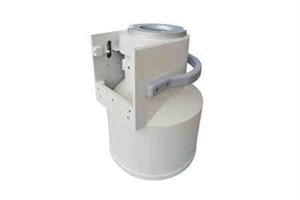
The visible differences between housings are more than cosmetic. A side bracket changes where a unit can be fixed, a carrying handle changes how it is lifted into position, and a rear panel decides where the supply and signal cables leave the assembly. On a replacement job those details determine how much of the existing installation stays in place. A unit that matches the existing bracket and cable routing keeps the intervention confined to the component itself.
That is why housing photographs contribute to a selection file rather than to a marketing comparison. An outline, a flange position and a connector location are observable facts. An installation note turns them into a checked list: bracket pattern, available clearance, cable length, connector assignment and the sequence for restoring the room to service. Handling features are recorded in that note; a model name is not expected to describe them.
A structured cross-check closes the distance between a catalogue entry and the assembly that arrives on site. Its lines are arranged below in the order of a replacement enquiry, starting with the host machine and ending with the acceptance record, rather than in the column order of a product table.
| Check line | Where the answer is recorded | Reason the code alone is insufficient |
|---|---|---|
| Host machine identity and installed origin | Machine documentation and the service record | A replacement configuration is defined by the equipment already in the room |
| Input-format family and field arrangement | Specification sheet and control description | A family name does not state the selectable fields or their control interface |
| Flange pattern, bracket envelope and cable route | Dimensional drawing and installation note | Housing variants share one family prefix while differing in mechanical detail |
| Low-voltage input and internal supply assembly | Electrical schedule and connector assignment | A suffix labels a build without describing its supply arrangement |
| Output window and camera-chain interface | Optical interface note and chain compatibility record | The imaging chain continues beyond the intensifier itself |
| Legacy equivalent for the installed unit | Machine documentation plus written order confirmation | Public notes disagree on legacy part-code sets; a single written equivalent is required |
| Accessory set and handling items | Packing list and installation note | Brackets, handles and cable sets vary between variants |
| Acceptance record and warranty handling | Delivery documents and service terms | Procurement terms are commercial documents, not properties of a model code |
A configuration statement says which build a unit is. A performance statement says what that build measures under a defined test basis. A compatibility statement says which installed machine the build fits. A commercial statement covers availability, terms and documentation. Confusing the four is the most common reason a short code acquires a meaning it does not have.
The separation has a practical use in correspondence. A quotation can refer to a designation, attach a specification sheet, and add a written fit confirmation as a separate document. If a dispute arises later, the three documents can be read independently. A single sentence claiming that one model is a universal replacement would collapse all four statements into one assertion that no document supports.
Field dimensions, supply values, resolution figures and endurance counts exist in product documentation, but the published material for this series does not converge on one agreed set of equivalents, tolerances and test conditions. A comparison assembled from unmatched figures would look precise without being verifiable. For the same reason, no legacy part codes are listed here: separate public notes cite different sets for the same replacement claim.
Figures enter the process at a later point, after a single source of truth is agreed and attached to the specification sheet. Until that happens, the defensible comparison is qualitative: which format family, which field arrangement, which housing and interface, and which documented fit. That comparison is less decorative than a table of numbers, and it survives a change of supplier documentation.
The practical sequence starts with the room, not the catalogue. The installed machine is recorded first: its bracket, its cable route, its supply arrangement and its camera chain. The required field arrangement is named next, because overview-oriented work and detail-oriented work place different demands on a selectable-field build. A specification sheet is then requested for each candidate variant, followed by a written fit confirmation for the chosen unit. Only at that point are the documents compared.
That sequence also covers applications beyond a conventional radiography room. Fluoroscopic observation on a mobile C-arm, a gastrointestinal system, or real-time industrial radioscopic viewing all depend on the same chain of decisions: entrance field, output interface, mechanical envelope and service documentation. A longer designation does not make a unit more suitable for any of them. The match between a documented build and a documented installation does.
The suffix records a defined configuration variant inside one format family. Its scope can include housing, supply arrangement, connectors or the accessory set, and the exact scope is stated in the specification sheet for that variant. The suffix is not a version ladder and does not imply that one build replaces another.
The fit is decided by the mechanical envelope, the flange pattern, the supply arrangement and the imaging chain of the installed machine. A format family describes an entrance-field class; it does not describe those interfaces. The answer is recorded as a written fit confirmation for the specific machine rather than as a general property of either family.
Published material for the series presents differing equivalents, tolerances and test conditions, so a table of unmatched figures would not be verifiable. A single agreed specification sheet is attached to the quotation, and the qualitative comparison of family, field arrangement, housing and interface is kept separate from that sheet.
A replacement configuration is defined by the host machine: its bracket, connectors, supply, optical output and documentation. The legacy equivalent is taken from the machine records and a written confirmation attached to the order. Public notes that cite differing legacy part-code sets are treated as background, not as the definition of fit.
The specification sheet defines the build, the dimensional and electrical notes define the interfaces, the written fit confirmation defines compatibility with the installed machine, and the delivery and service documents define acceptance and warranty handling. The designation groups those documents under one reproducible configuration label.
Specification sheets, designation-to-document cross-checks, interface assignments and written fit confirmation for X-ray image intensifier configurations.
Email: admin@newheek.cn. WhatsApp: +86 19062611512
Matching an imaging format to the examination | Service terms during a replacement plan | Component-level differences between imaging applications
Tel: +86 19062611512
Email : admin@newheek.cn
Company : Weifang Newheek Electronic Technology Co., Ltd.