
It usually starts with one question: how much is a veterinary X-ray machine?
We get that email most days. Sometimes it is a single line. Sometimes it is a forwarded inquiry from a distributor with six question marks attached. Either way, our first reply is a few questions of our own, because a single price for a “veterinary X-ray machine” is about as useful as a single price for a “vehicle.” A portable unit that rides around a horse barn and a fixed room in a busy small-animal clinic are both called X-ray machines. They are not the same purchase.
So we wrote down the conversation we actually have. These are the questions behind the searches for veterinary X-ray machine price, portable vs fixed DR, detector size, wired vs wireless panels, and the rest — answered the way we answer them on the phone, not the way a brochure would.
First question: what animals are on your table?
This sounds obvious, but it changes nearly every number that follows. A practice that mostly sees cats and small dogs can work with a 14 × 17 in detector and a modest generator. Add large dogs, and you start caring about table capacity, focal spot size, and how many kilowatts you have for a thick abdomen. Add horses, and you are no longer talking about a room at all — you are talking about a portable generator, a wireless panel, and a detector that somebody is willing to carry across a yard in the rain.
Ask for the case mix, not just the species: how many patients a day, how many of those need radiographs, and how many are sedated. Sedation is the quiet driver of table choices. If you are positioning a sleeping Labrador, the difference between a fixed tabletop and a four-way floating one is not a luxury feature; it is the difference between one pair of hands and three. We have a longer write-up on how four-way floating veterinary tables work if that is your situation.
The price ranges you will find online — and what they leave out
Let us get the number out of the way, because it is the reason most people land on this page. Published 2026 dealer guides put veterinary X-ray systems roughly in these bands:
| System type | Published 2026 range | What usually sits in that band |
|---|---|---|
| Entry-level portable | USD 19,500 – 30,000 | Portable generator, 14 × 17 in detector, basic workstation |
| Mid-range portable or fixed | USD 31,000 – 45,000 | Better generator, wired or wireless panel, veterinary software |
| Premium stationary | USD 40,000 – 50,000 | Fixed room, higher output, full positioning accessories |
| With fluoroscopy | USD 75,000 – 85,000 | Live imaging for orthopedic and interventional work |
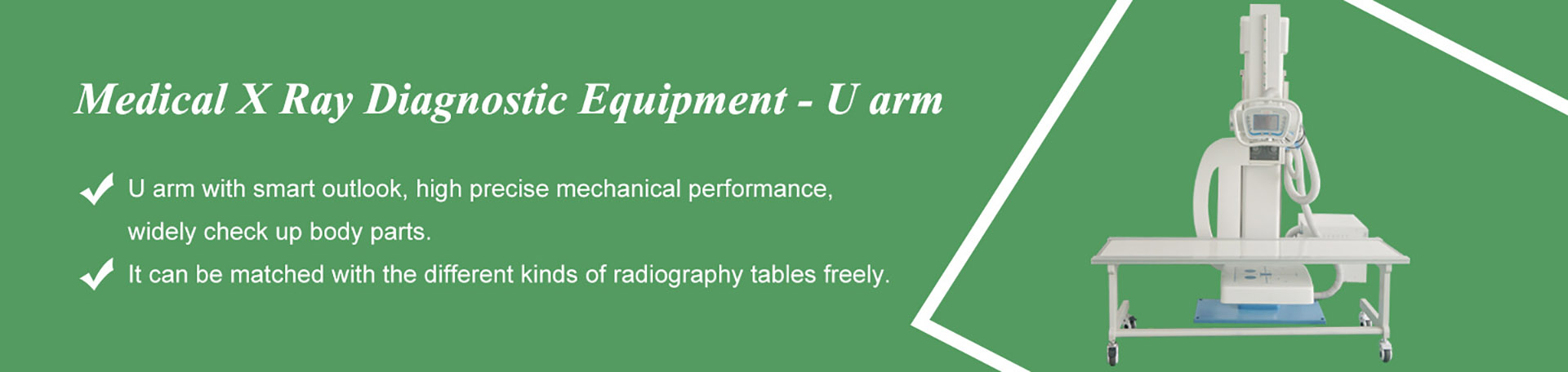
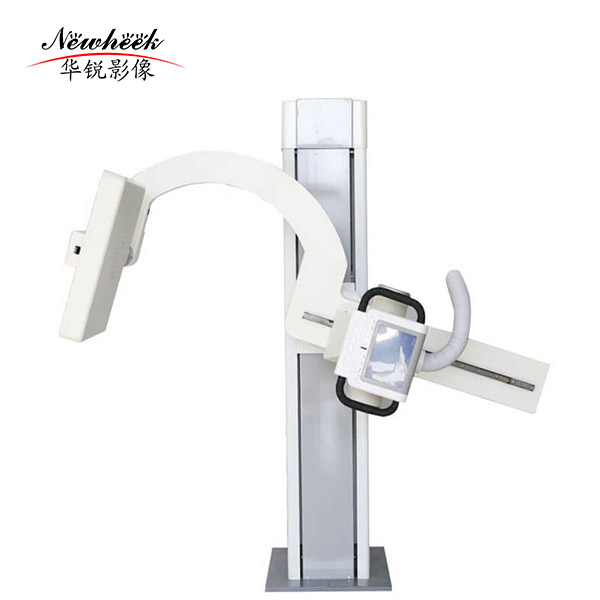
Those are public dealer tiers, not our quotation. Our own breakdown of what a U-arm DR system costs in 2026 lands in a similar place for fixed clinic-grade machines: most mid-range systems fall somewhere between USD 25,000 and 45,000 depending on configuration.
Here is the part that gets missed. The number in the first email is usually for the machine, not for the room. Shielding design, power upgrades, a cable trench, installation, training, shipping and local registration all sit outside that line. We have watched a perfectly reasonable equipment quote turn into an awkward conversation because nobody had budgeted for a three-phase supply or a shielding review. One dealer guide puts a replacement flat panel at USD 8,000 to 15,000 — worth asking what your warranty actually covers before you sign anything.
Portable or fixed? This is the fork in the road
A portable system earns its keep when the machine has to come to the animal: equine work, farm calls, house calls, or a small clinic with no room to spare. You trade some output and some image consistency for the ability to set up anywhere.
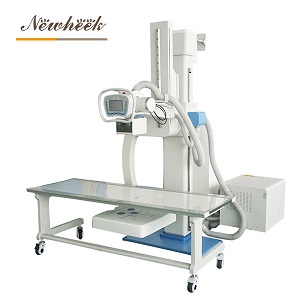
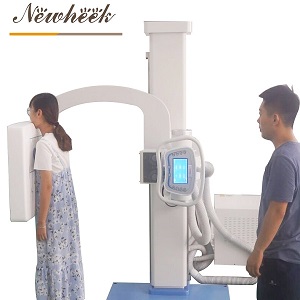
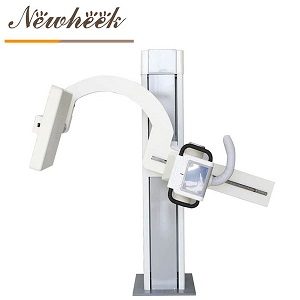
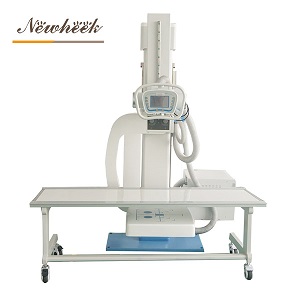
A fixed room earns its keep through repetition. When you take fifty images a week, standardized positioning matters more than mobility. A U-arm or UC-arm lets the tube swing around a standing, seated or recumbent patient without moving them, which is why it shows up in hospitals and busier clinics. If your requirement is chest and spine radiography rather than live fluoroscopy, our note on writing a U-arm vs C-arm RFQ explains how to keep the quotation on target.
Our honest rule: if you are doing fewer than ten radiographs a month, do not buy a new fixed room. Find a local imaging partner or look at a refurbished unit. If you are doing ten a day, buy the room and plan it properly.
14 × 17 or 17 × 17? The question that sounds technical but is not
For cats and small dogs, 14 × 17 in is enough and the panel is easier to handle and position. For large dogs, whole-spine views, or equine work, a 17 × 17 in square panel saves you from stitching images together. Bigger is not automatically better: a larger panel costs more, and if you never use the extra area you are paying for empty space.
The same logic applies to wired versus wireless. A wired panel in a fixed room is simple, reliable, and has one less battery to forget about. Wireless panels make sense when the detector has to move around a large animal or between rooms — the trade-off is charging discipline and a higher purchase price. We have seen more than one clinic buy wireless for a fixed room, then leave the cable in the drawer and charge the panel every morning anyway.
The room is part of the machine
Three things are cheaper to fix before delivery than after: power, cabling and shielding. A typical fixed U-arm room wants three-phase 380 V supply with adequate capacity and proper grounding; single-phase buildings need to say so at quotation stage. A cable trench keeps high-voltage cabling protected and lets the rack sit close to the wall. Radiation shielding is a regulated design task and belongs to a qualified local expert under your local rules — we provide the machine’s electrical and emission data, but the sign-off is a local process.
Our page on U-arm room requirements goes through dimensions, ceiling height, floor loading and delivery routes in detail. Read it before you order, not after the crate arrives.
DICOM and PACS: when it actually matters
A standalone clinic with no referral workflow can often work with local image storage. The moment you send cases to a specialist, use teleradiology, or join a hospital network, DICOM stops being a line on a brochure and becomes a requirement. Ask for the DICOM conformance statement in writing, along with modality worklist and image routing support. It is a small question that prevents a large headache after installation.
What to send us before asking for a price
You do not need a perfect technical file. Six lines are enough to get a usable answer:
- Animal types and approximate weight range
- Examinations you run most often, and images per day
- Room size, ceiling height, and which floor it is on
- Power available on site — three-phase or single-phase
- Detector preference: 14 × 17 or 17 × 17, wired or wireless
- Whether you need a table, an upright stand, or both
Add photos of the room and the delivery route if you have them. A rough phone photo of a doorway has saved more installations than a perfect floor plan drawn from memory.
Frequently asked questions
How much does a veterinary X-ray machine cost in 2026?
Published ranges run from roughly USD 19,500 for an entry-level portable unit to USD 85,000 or more for a system with fluoroscopy. A fixed clinic-grade DR room usually lands between USD 30,000 and 50,000 before room work. Configuration, certification, destination and service terms all move the number.
Can a U-arm be used for dogs and cats?
Yes. U-arms are used in both human and veterinary radiography rooms. The key question is whether your work is mostly static radiography — chest, abdomen, spine, limbs — which is what a U-arm is built for. Continuous live fluoroscopy is a different machine category.
Is a wireless detector worth the extra money?
For a fixed room, usually not. For equine, field or multi-room work, yes — the positioning freedom is the reason to buy it. If you go wireless, budget for spare batteries and a charging routine.
Does a veterinary X-ray room need shielding?
Often, yes, but the requirement depends on the room, workload, adjacent spaces and local regulations. A qualified local radiation-safety professional should make that call. We supply the machine data they need.
How long does delivery and installation take?
It depends on configuration, stock, shipping destination and how ready the room is. The room is usually the long pole. Ask us for a timeline against your specific configuration rather than relying on a generic number.
What does a quote usually leave out?
Common omissions are shipping, installation, training, shielding work, power upgrades, software licenses and extended warranty. Ask for those lines explicitly so two quotations can be compared fairly.
Can you just send a price list?
We can send a price for a defined configuration. A bare list tends to compare different machines under the same name, which is how buyers end up with the wrong room.
Start with the room and the caseload, not the catalogue
Send us the six lines above and we will come back with a configuration check and a formal quotation, usually within 24 hours on working days (Monday to Saturday). If you would rather talk it through first, write to admin@newheek.cn or message us on WhatsApp / telephone at +86 19062611512.
And if all you have right now is one line — “how much?” — that is fine too. We will ask the questions.