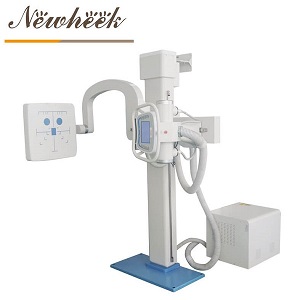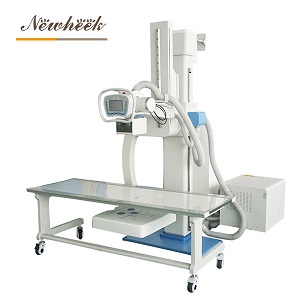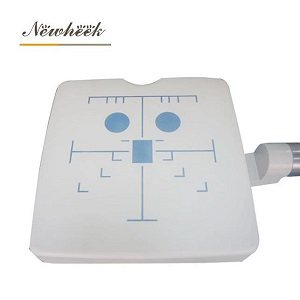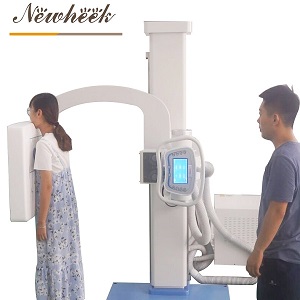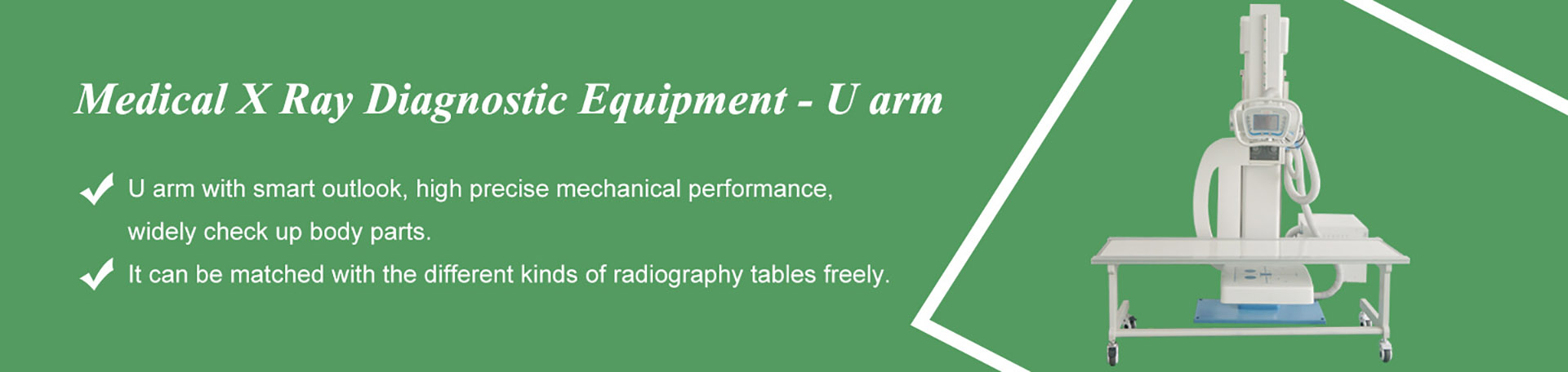

a four-way floating X-ray table lets the tabletop glide forward-backward and side-to-side, so the veterinary team positions the table under the tube instead of dragging the animal into position. For clinics that photograph sedated animals, large dogs, or multiple patients a day, it turns positioning from a two-person struggle into a one-foot-pedal operation. Low-volume clinics that mainly shoot standing views on cooperative patients can honestly live without one.
Walk into most veterinary practices and you will find the same scene at the X-ray table: one person holding a wiggling terrier in lateral recumbency, another reaching across to nudge the cassette, and a third calling out that the shoulder is not over the film. Positioning is where most retakes are born. A four-way floating table is the piece of hardware that quietly removes most of that struggle — and it is increasingly specified for dedicated small-animal rooms. This guide explains how the floating mechanism works, what changes in daily workflow, and how to judge whether your clinic actually needs one.
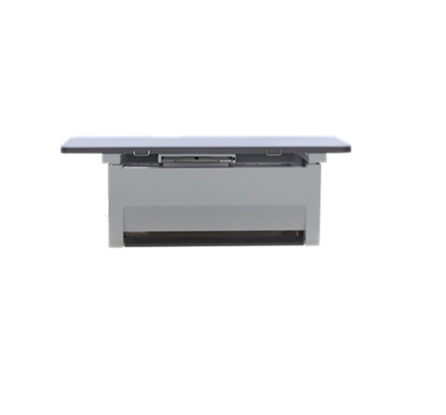
Under the tabletop sits a carriage that lets the surface travel in four directions — lengthwise and crosswise — typically released and locked by a foot pedal, so both of the operator’s hands stay free to manage the patient. Step on the pedal, glide the tabletop until the area of interest sits under the tube and over the cassette, lift your foot, and the surface locks solid for the exposure.
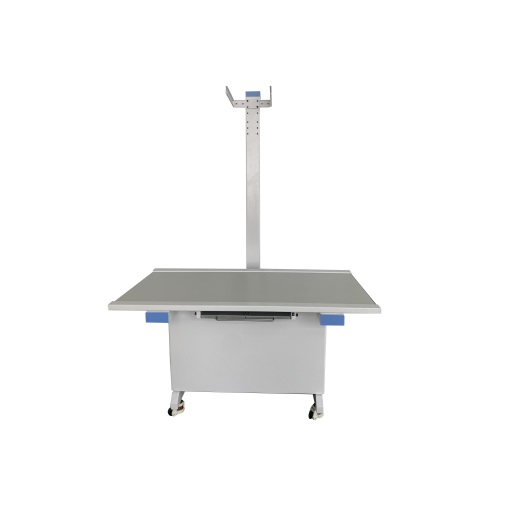
The point is not motion for its own sake. It is that the heavy, uncooperative thing stays still while the smooth, predictable thing moves. With a fixed table, you re-drag the dog. With a floating table, you slide the table — and a sedated Labrador does not have to be lifted, shifted, or re-settled three times to get one orthogonal view.
For readers who want a short spec-style introduction to these tables, the site has an earlier piece on the fixed four-way floating veterinary examination table; this article goes deeper into workflow and buying decisions rather than repeating it.
Floating tables exist in human radiography too, but in veterinary work the payoff is disproportionately larger:
| Type | What it does | Suits |
|---|---|---|
| Fixed table | Static surface; the animal is moved into position | Very low caseloads, wall-stand-centric rooms |
| Four-way floating | Tabletop glides in four directions, foot-pedal lock | The general-purpose choice for small-animal recumbent work |
| Six-way floating | Adds further movement axes for specialized setups | Rooms that pair the table with U-arm or UC-arm systems needing extra alignment freedom |
For most small-animal practices, four-way is the sweet spot: you get the workflow benefit where it matters (fine positioning over the cassette) without paying for movement axes you may rarely use. If your room pairs a table with a U-arm and you want maximum alignment flexibility, the site also has an article on six-way floating radiology tables linked at the end.
Clinics that switch to a floating table usually report the same small but compounding changes:
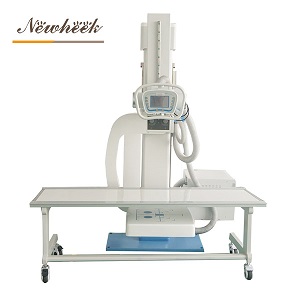
A floating table is rarely bought alone; it is chosen as part of a room. Two pairings are common:
Either way, decide the pairing before you buy the table: tube-head reach, column travel, and tabletop travel need to be planned together so the room actually works as one machine. If you also see large or giant-breed patients, it is worth reading the site’s piece on photographing large animals with a U-arm, because patient size changes the table-and-tube conversation.
Because these tables look similar in photos, the differences are in the details. Before ordering, check in person or by video call:
A four-way floating table is a workflow investment, and not every room needs one. If your caseload is a handful of standing chest and limb views a day on cooperative patients, a fixed table or a wall-stand-centric setup will serve you fine. If you run orthopedic work, sedated studies, screening sessions, or simply more than a dozen table studies a day, the floating mechanism pays for itself in time and retakes — usually faster than clinics expect.
On most designs the glide is mechanical and the pedal simply locks and unlocks it, so positioning still works during a power interruption. Confirm the mechanism type with the supplier when ordering.
Tables designed for veterinary use are built for exactly that load profile, but the honest answer belongs in the product documentation — check the rated capacity on the product page or ask the supplier to confirm it in writing for your heaviest patients.
It should not be. Choose a sealed, non-porous tabletop, wipe down between patients as you would any clinic surface, and periodically clean the tray slot where hair and debris collect.
Start from your room plan, not the feature list. A single-table small-animal room with a column is usually well served by four-way; rooms built around U-arm or UC-arm alignment flexibility are where six-way earns its keep. The linked article on six-way tables covers that scenario in detail.
For veterinary X-ray table configurations, room planning, or a quotation:
WhatsApp: +86 19062611512
Email: admin@newheek.cn
Tel: +86 19062611512
Email : admin@newheek.cn
Company : Weifang Newheek Electronic Technology Co., Ltd.